


Why They Left Norway: The Journey to America

There is something deceptively simple about a single line on a family tree.
Born in Norway. Died in America.
You see two places, two dates, and perhaps the name of a ship or a faint port stamp if the church and immigration records held up. What that ink cannot capture is everything that happened in the space between those two points. It cannot show the physical weight of a domed, iron-strapped kiste painted with traditional rosemåling and packed with dried flatbrød, sheepskins, a worn family hymnbook, and iron tools. It cannot convey what it felt like to lock the door on a hillside farm where your ancestors walked the same stone paths for three hundred years, knowing you were walking down to the fjord to leave it all behind. And it certainly cannot tell you whether the people standing on the wooden pier, watching the ship slip into the morning mist, understood they were looking at their children for the very last time.

Between 1825 and the early decades of the twentieth century, more than 800,000 Norwegians made that exact choice. Relative to its population, only Ireland saw a larger portion of its people cross the Atlantic. My own family’s foundation rests upon that mass departure. All four Norwegian branches of my family eventually crossed the ocean. They started new lives that would slowly weave together generations later. They did not leave at the same time, under the same circumstances, or for the same reasons. Their personal journeys will be told one book at a time, but the broader history beneath their choices reveals just how much was truly at stake, and the staggering risks ordinary people took for the mere chance of something different.
In nineteenth-century Norway, survival was carved out of rock, fjord, and steep valley walls. Improved health and a drop in infant mortality caused the country’s population to boom, but the land itself could not expand with it. Under the long-standing tradition of odelsrett, ancestral farm property passed directly to the eldest son to keep holdings intact. For younger siblings with no land to inherit, the valley walls offered almost nowhere left to grow. Many were pushed into becoming tenant cottars who worked small, rocky plots leased from large landowners. They paid for their shelter with heavy physical labor, lived at the whim of the landlord, and possessed virtually no path toward ever owning the ground beneath their boots.

Combined with periodic crop failures, brutal winters, and a rigid social hierarchy governed by the state church and local officials, the pressure in the valleys became immense. America offered more than higher wages; it aggressively recruited them. American states and railroad companies sent agents straight into Scandinavian ports and valleys, circulating brochures in Norwegian that praised the near-mythic promise of the Homestead Act of 1862: 160 acres of free, tillable land that could belong entirely to the person working it. For some, leaving was a matter of sheer economic survival. For others, it was pure ambition. Some sought timber, some sought dirt, some sought fishing waters that mirrored the North Sea, and some simply wanted to shed the immovable class boundaries of their home valleys. There was no single Norwegian immigrant story.
There is a fitting symmetry in the fact that this journey west followed a very old wake. Nearly nine centuries before the nineteenth-century passenger ships set sail, Norse sailors had already navigated the North Atlantic, establishing a settlement at L’Anse aux Meadows in Newfoundland around the year 1000, a historical fact that leads many Norwegians today to politely yet firmly dispute the notion that Columbus discovered America. By the late 1800s, longships and exploratory sagas had been replaced by crowded steamships and immigrant trunks. Yet the idea of the western horizon had long lived in the Norwegian cultural memory. What made nineteenth-century America feel real and attainable was not ancient history. It was the steady trickle of paper coming back across the sea.
One person’s decision could rewrite the trajectory of an entire bloodline. Letters from the new world traveled back across the Atlantic and were treated like treasures. They were passed from hand to hand across valleys, read aloud by firelight, and debated in parish churches until the paper grew soft and frayed. These letters carried astonishing news: stories of white wheat bread eaten daily, meat on the table multiple times a week, cash wages paid promptly for hard labor, and a society where a common worker did not have to bow his head to the local elite. Most importantly, a letter proved that someone from the home village had survived the Atlantic and found solid footing on the other side.
Chain migration quickly took hold. A brother went first, sending back a prepaid ticket for his younger sister. A cousin followed to work the harvest, and a neighbor heard there was timber work or maritime trade in coastal towns that smelled of cedar and salt. Gradually, entire Norwegian settlements took root thousands of miles away, easing the terrifying shock of the unknown. Yet having a cousin waiting on a platform in the Midwest or the Pacific Northwest did not lessen the agony of leaving the old world behind.

Today, geographical distance is an inconvenience managed by a plane ticket or a phone call.
In the nineteenth century, distance was often final. Communication moved at the speed of steam, rail, and canvas. A letter announcing the birth of a grandchild might arrive after the infant was already walking, and news of a mother’s grave illness often arrived weeks after the dirt had settled over her coffin.
The crossing itself was an arduous dividing line. Whether enduring weeks in the dark, swaying bellies of early wooden sailing ships, or days packed into the steerage of ocean- going steamships like the famed RMS Carpathia, immigrants battled relentless seasickness, disease, stale water, and the crushing anxiety of being suspended between two worlds. When an emigrant hugged their parents goodbye on the dock in Bergen, Christiania, or Trondheim, both sides understood the brutal reality that they would likely never see each other's faces again. Statistics can record the exact tonnage of the vessels and count every name entered into the shipping ledgers, but they cannot measure the silence left behind in the valley homes or the weight of those final embraces.
Stepping off a gangplank onto American docks was not an immediate guarantee of security. New arrivals faced medical examinations, legal scrutiny, and the threat of being turned back under evolving immigration laws. Those who cleared inspection stepped into a bewildering, fast-moving landscape where many spoke no English. They had to navigate unfamiliar currency, foreign laws, complicated train transfers across an enormous continent, and the urgent necessity of finding work and shelter before their remaining savings vanished.
Norwegian-language newspapers, immigrant-built Lutheran churches, and established kin networks served as vital lifelines. Immigrants leaned on one another to translate legal deeds, learn new farming techniques, find logging camps, and get through bitter first winters. Furthermore, stepping onto American soil did not grant legal standing as a citizen. Naturalization required years of residency, formal legal petitions, witnesses, and court appearances. Opportunity existed, but every inch of security had to be built with raw labor.
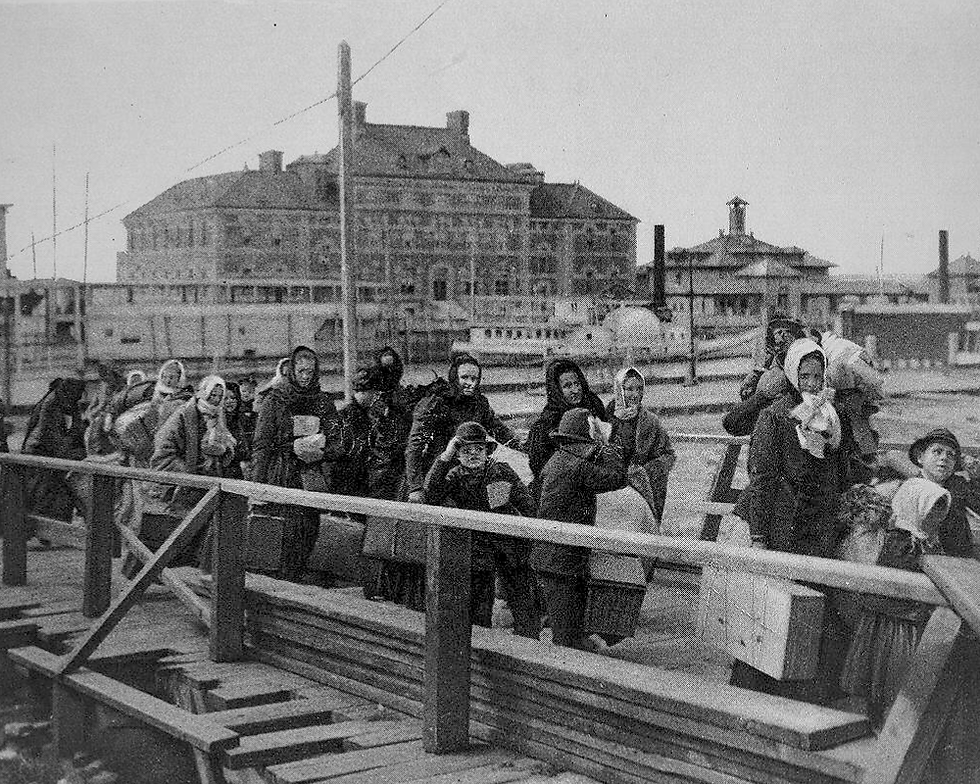
Looking backward across four or five generations creates a comforting illusion of inevitability.
It is easy to think that of course they left, of course they survived, and of course their children found each other so their descendants could become us. We know how the story turned out, but they did not. The young man carrying his trunk down to the harbor could not see the generations that would follow him. He did not know if the farm he broke ground on would survive the first freeze, or if the glowing promises written in the letters sent back home had been exaggerated. The young woman staring out over the ship’s rail did not know if she would spend the rest of her days aching for the sound of mountain streams and her mother’s voice.
Even within the same household, one sibling chose to leave while another chose to stay and bear the burden of the family farm. Two people in the same valley, facing the exact same poverty, made diametrically opposed choices. Every one of my four Norwegian family lines eventually reached American soil, but their reasons, timelines, and sacrifices belong to separate, distinct stories. While weathered headstones in quiet churchyards mark where their long journeys ended, their true legacy isn’t carved in stone; it lives in the generations of descendants they created, rooted in the very soil they gambled everything to reach.

That unresolved tension between choice and circumstance sits quietly beneath my series, Before the Anchor: The Forging of a Family. Beginning with The Sunstone Path, the series follows these separate threads through the realities of immigration, industry, hardship, love, and loss. While the books may be classified as historical fiction, they are true stories. They belong to my great-grandparents, meticulously researched through archives, family records, and historical documents, then reconstructed to the absolute best of my ability. Where the historical record goes quiet, I worked like a detective to bridge the silences, but these people and their journeys are not fabricated.
Real people packed those trunks. Real families split apart across the ocean. Some found the prosperity they sought, while others discovered challenges they never could have anticipated while standing on Norwegian soil. And some remained behind in the valleys. I am deliberately not going to tell you which reasons belong to which people just yet, as that belongs to their individual stories. For now, it is enough to know that eventually four separate paths led from Norway to America. Generations later, those lines converged to create one family. Before there could ever be an unbreakable anchor, it first had to be forged.
-TJ Nilsdatter
Subscribe to The Anchor to get monthly updates, upcoming book announcements, and your free monthly collectible bookmark.
Comments