


AI: The Good, The Bad and The Ugly

AI has become one of the most debated topics in creative spaces, and for good reason. But somewhere between the extremes, there’s a quieter reality that doesn’t get talked about as often: how it’s actually being used by writers trying to tell meaningful stories. This isn’t a defense of AI, and it’s not a warning either. It’s simply an honest look at how I use it in my own work, the good, the bad, and the ugly.
AI has existed for a long time now, longer than it’s been a household word. It started in the 50s and 60s with things like Eliza and even the infamous Clippy. When I think of AI, I think of cylons from Battlestar Galactica or Skynet from Terminator. But for most of us, AI didn't feel real until it showed up in our homes through Siri and Alexa. That was my first real experience with it. I didn’t actually start discovering how useful it could be until about a year ago, when I used it to help my husband navigate a long job search in this new AI-driven world. Since then, I’ve learned a lot. I use it now for all kinds of things, wedding planning, recipes, troubleshooting my computer, planning camping trips, and yes, as an assistant with my writing.
It is changing the world as we know it, and for writers it opens up avenues that didn’t exist before. There are people with stories to tell who did not have the means to put pen to paper. Think of someone battling rheumatoid arthritis, dyslexia, or any number of conditions that might make writing difficult. AI gives them a way to get those stories out. For me personally, it was a confidence boost. I’ve been writing my whole life, but I lacked the confidence to do anything with it. It wasn’t until I pasted a chapter into AI and got instant feedback that it could actually turn into something, that I started to believe in it.
As a writer of historical fiction, it’s also been an invaluable research partner. This is also where I have to be careful. I’ve seen AI confidently present information that simply isn’t true, and worse, present it in a way that looks completely legitimate. In one case, it even generated what appeared to be a real newspaper article that didn’t exist. That’s a problem. When you’re working with real history, accuracy matters. AI can help point you in the right direction, but it can’t be trusted as a source on its own. Everything still has to be verified.
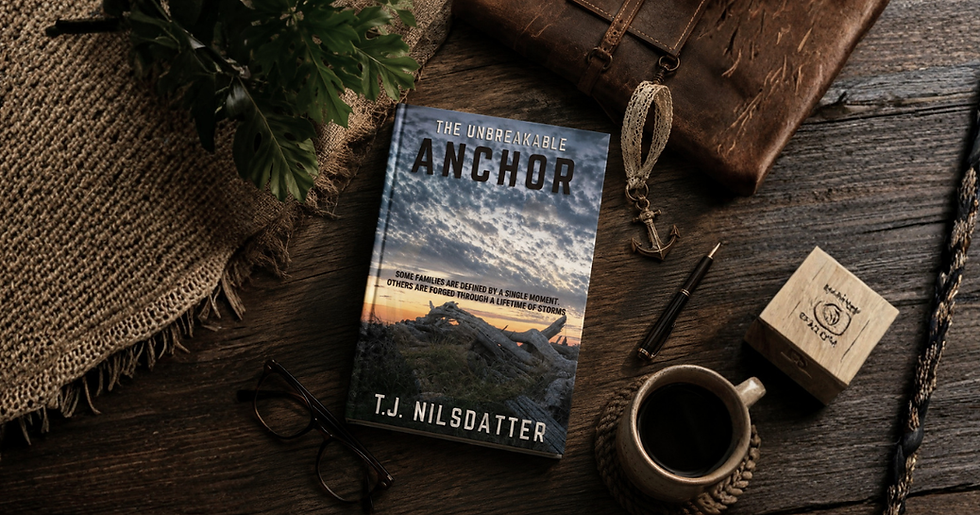
Most of all, it’s a sounding board, helping me catch plot holes, tighten structure, and even notice things like overused adverbs or commas. As someone deep in a long editing process (I’m currently on edit four of The Unbreakable Anchor, with a 5th to go), that kind of feedback is genuinely useful, and is much needed for times when I suffer through writers block or my eyes just get tired and everything blurs together.
It's not a magic button however. I spend a lot of time going back and forth with it, clarifying, correcting, rewording, and yes, occasionally yelling at it because it’s not listening or completely missing the point. It can be frustrating. It gets things wrong a lot of the time. It goes off track and it doesn't remember anything. It is programmed to be a "yes man" and in trying to reach that goal it will hallucinate details. But that’s part of the process too. Sometimes it even adds more work for me by getting facts wrong and I base chapters on these facts only to find out later on they are incorrect.
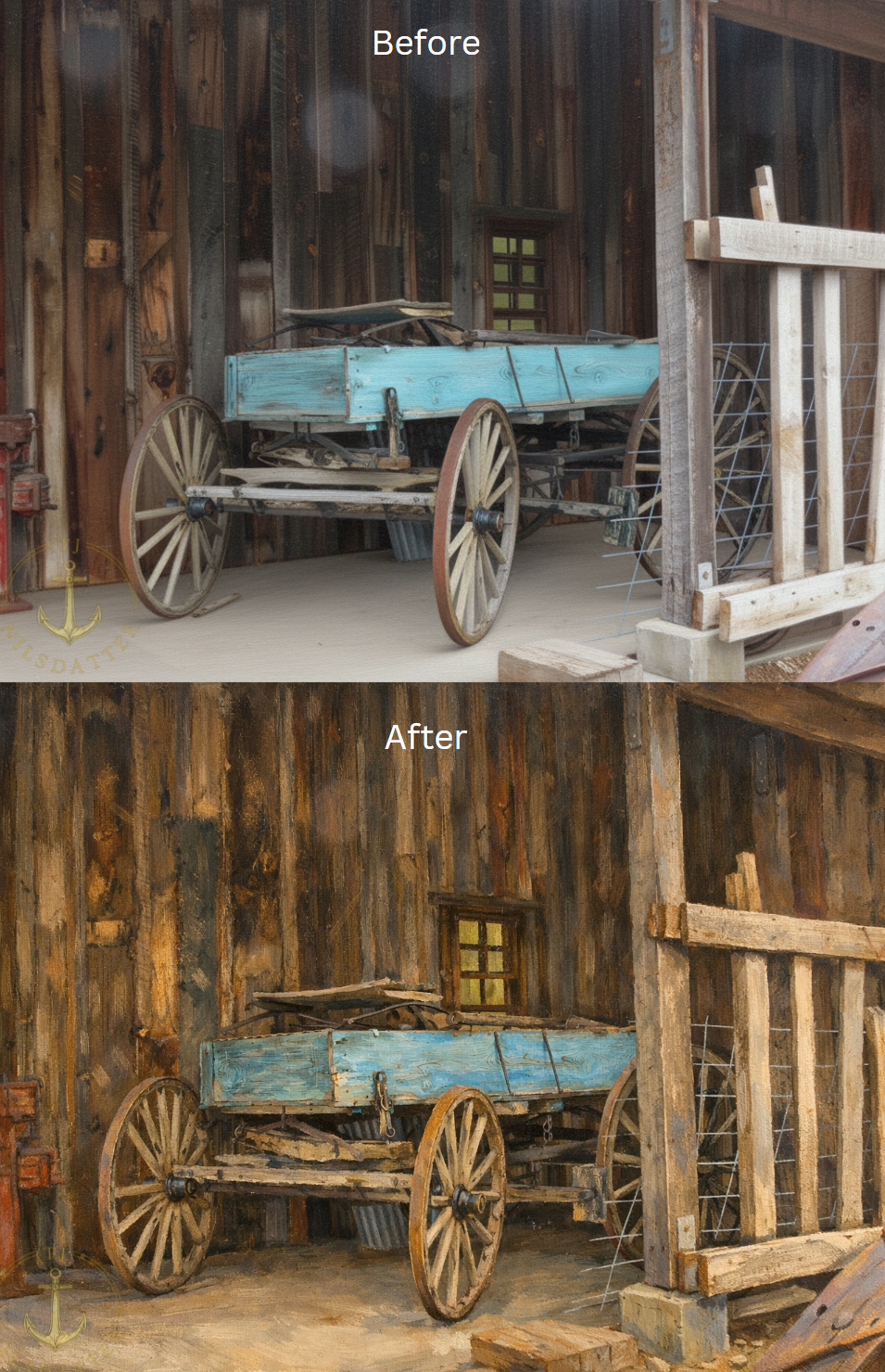
The other way I use AI is in graphic design. I’ve been doing that as a hobby for years, long before AI tools existed. I’ve made my own graphics, logos, cards, newsletters for a long time, and I still do. AI has just added another layer. A lot of people don’t even realize they’re already using AI, it’s built into Photoshop, Canva, and most modern design tools. My book covers were made in Canva. My memoir has no AI involved at all, the cover is from a photo I took at Cape Disappointment but for my historical series, I did use AI to convert my photos into paintings. I took those paintings into Canva and then added all the other elements to them. Now I could've done all that in photoshop but AI is better at it and faster then I would be. As someone with time constraints it is a relief to be able to spend more time on my writing then fiddling around in photoshop.
I’ve also used AI to help me visualize a world I can’t actually see. I uploaded real photos of my great grandmother, my grandmother, and myself and asked it to create an image of what my great grandmother might have looked like in 1905. When that image came back, and I could see all three of us in one face, it was emotional. It helped me connect with Regina in a way I hadn’t before and you can get it to do that exactly ONE time cause any other request turns into some kind of deformed monster. You can get a beautiful image back, and then realize it gave her three arms. At that point, you just have to laugh and start over. It's one of the many limitations there are with AI image generation. You can't just say "paint like Picasso" and a masterpiece will appear.

This is where things get complicated. There are people who will shut down anyone who uses AI at all, and on the other end, people trying to make a quick buck by letting AI write entire books. I’ve seen both sides. AI is scary for a lot of people, and not without reason. It is taking jobs. My husband has been out of work for almost two years, a veteran, with 30 years of executive experience. My son, with a master’s in IT, can’t get a single interview. The entry-level jobs that used to build careers for him are disappearing to AI. So when people raise those concerns, they’re not wrong. But at the same time, AI also creates opportunities.
There’s also a financial reality that doesn’t get talked about enough. Breaking into writing can cost thousands of dollars, editing, covers, formatting, marketing. That is a big ask to invest that kind of money for something that may never make any of that back. For a lot of people, that’s simply out of reach. AI doesn’t replace those things, but it lowers the barrier enough for someone to start. And sometimes, that’s the difference between a story staying in someone’s head, or finally making it onto the page.
All the talk about AI taking over the world is premature though. It’s not there yet, not even close. We are nowhere near a Battlestar Galactica scenario, and here’s why: AI has no soul. It cannot create with intention, and honestly, it’s not great at storytelling.
I ran an experiment and had AI write a chapter about my husband’s accident overseas with sources directly from The Unbreakable Anchor. It came back with something technically impressive… but completely over the top. I’m calling it:
AI GONE WILD — courtesy of Google Gemini
“The humidity—a damp, suffocating wool blanket soaked in the spicy tears of a thousand street vendors—clung to Alex like a desperate ex-girlfriend who refused to accept the breakup of the season. He gripped the handlebars of the scooter—his mechanical steed, a plastic-clad Pegasus of the Orient—as the engine let out a high-pitched whine that sounded like a vacuum cleaner trapped in a blender.
Bangla Road was a kaleidoscope of chaos—a neon-drenched fever dream where the lights pulsed like the heartbeat of a frantic rabbit—and Alex was the carrot.
"Stop!" a voice thundered—a sonic boom of authority that shattered the humid air like a brick through a stained-glass window—as the Thai police emerged from the shadows like jaguars in khaki. “
As you can see, AI can sound impressive, but it doesn’t know when to stop. It leans into patterns, overuses metaphors, and mistakes “more” for “better.” This is not useful unless you're planning on going on writing comedy tour. Over time, you start to recognize those patterns, and you realize just how far away it is from replacing real writers. That said, there are people who make it their mission to tear down anyone who even touches AI. But AI isn’t going anywhere. Just like computers didn’t, or cars, or cell phones. Progress happens whether we like it or not.
I don’t use AI to write my stories. I use it to support the process of telling them. I write every word that makes it into my books. AI helps me refine it, shape it, fix mistakes, often over multiple drafts. AI is not the storyteller, I am. AI is just an tool. And like any tool, it can be used well or misused. The difference isn’t in the technology, it’s in the person using it.
For me, it’s about preserving stories that might otherwise be lost, whether they’re family histories, lived experiences, or something entirely imagined. In my case, I write to leave a legacy for my family, the one thing that carries on after we are gone. As a storyteller, I use the tools available to me to help bring that vision to life, while staying transparent in the process. My hope is that comes through to my readers in The Unbreakable Anchor, in The Sunstone Path, and the stories still yet to come.
-TJ Nilsdatter
Subscribe for book updates, new blog posts, family history, and a behind-the-scenes look at the inspiration behind the books.


Comments